2. Contribution to a Just Transition in Scotland
The Just Transition Communities Project (JTCP) puts communities at the centre of planning and decision-making through deliberative democratic processes. In line with the Scottish Government’s National Just Transition Outcomes, we are delivering on social equity, inclusive economic opportunity, community empowerment, and climate action across North East Scotland.
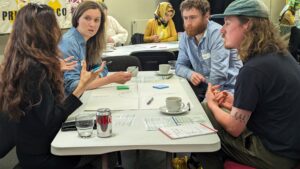
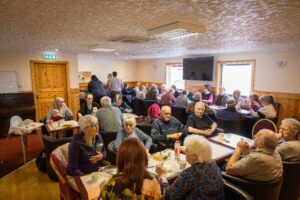
Through Community Assemblies in Banff, Macduff, Huntly, Kemnay, Torry, Tillydrone, Seaton, and Woodside – alongside work in rural Moray and with thematic groups such as ethnic minorities and young people – we enable communities to define priorities, build consensus, and implement place-based solutions. This directly supports JT Outcome 1 (supporting people in the transition) and Outcome 3 (community-led action), empowering local people to articulate challenges and seize opportunities for a fairer, greener future.
Connection to Regional Industrial Heritage
Our work is rooted in the region’s industrial heritage, particularly the legacy of oil and gas, which has shaped land use, urban development, and the economy. As the region transitions away from carbon-intensive industries, we position communities to lead renewal efforts, develop new skills, and diversify local economies. The pilot Torry Community Retrofit Project – emerging from JTCP engagement and later expanded through the multi-million-pound Just Systems Project – is one example, tackling fuel poverty and RAAC repair needs with climate-smart solutions.
Benefits to the Region and Scotland
The project strengthens community capacity, leadership, and democratic participation. Local action plans, grassroots initiatives, and closer collaboration with councils are delivering tangible results. Projects like Woodside Decides have put community commissioning into practice, allowing residents to direct funding to locally determined needs. Collaborative successes – such as Seaton groups securing joint funding or Huntly’s micro-grid design at Greenmyres Farm – show progress toward energy resilience and local economic development (Outcome 6).
We address social inequalities and barriers faced by ethnic minorities, low-income communities, and rural residents, supporting Outcomes 2 and 5. Work with YAYHA’s Hub (https://yahyashub.org/) and a regional ethnic minority women’s group identified challenges in representation, safety, and access to nature—now being tackled through inclusive planning and action.
Skills development is integral. Training in facilitation, leadership, and sociocracy equips community members and third-sector groups to run their own assemblies and projects. Volunteers gain climate literacy and take on roles that broaden participation in the net zero transition.
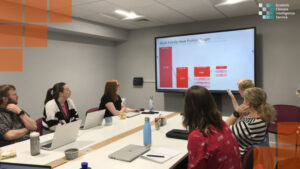
By working with local and national government, as well as energy and infrastructure partners, we are seeking to ensure community priorities shape regional Just Transition strategies. Evidence gathered through evaluation, reporting, and collaboration with the University of Aberdeen’s Just Transition Lab promotes the case for grassroots solutions and community perspectives to influence policy and investment decisions.The JTCP is helping communities move from consultation to co-creation, from marginalisation to empowerment – laying the foundations for a truly Just Transition in North East Scotland and providing a model for other regions.
Lessons learned
- Effective Dual-Track Approach: The JTCP and NESCAN Hub complement each other by combining support for climate-active communities, with outreach to underserved and marginalised groups. This ensures both proactive and responsive community needs are addressed.
- Deep Local Engagement: Practitioner-led, place-based work – such as in Huntly and Torry – shows that long-term trust-building and locally tailored solutions anchor climate action in social justice.
- Empowerment through Asset Ownership: NE places and communities continue to raise and campaign for projects like the Udny Wind Turbine – which illustrate how community control of energy assets delivers both tangible benefits and confidence, encouraging wider participation.
- Having a locally owned regenerative income stream will support further JT community initiatives moving forward, which meets a huge need and challenge as it is often the availability of funding and resources that inhibits community growth and development.
- Community Wealth Building Success: Huntly Development Trust’s (huntlydt.org) achievements demonstrate the transformative effect of aligning resources, capacity, and vision with local priorities.
- Robust Monitoring and Evaluation: A comprehensive MEL framework tracks both qualitative and quantitative outcomes, guided by four principles – Inclusivity, Consensus, Motivation/Involvement, and Continuity – ensuring progress is meaningful and community-validated.
- Expanding Networks and Capacity: Peer-to-peer learning and joint action planning are building a resilient network of climate champions across the North East.
- Additional Insights: Place planning requires long-term commitment; flexible, locally adaptable planning models work best; creative engagement builds community identity; assemblies accelerate strategic action; and youth participation is essential but must be structurally supported.
Constraints and Challenges
- Lack of Infrastructure: Loss of affordable community spaces and shortages of skilled, paid community development staff limit momentum.
- Institutional Barriers: Inflexible policy frameworks, bureaucratic delays, and inconsistent application of place-based governance models hinder alignment between community aspirations and formal processes.
- Community Limitations: Volunteer fatigue, demographic constraints, social fragmentation, and unstable funding disrupt continuity and undermine grassroots sustainability.
- Communication Gaps: Unclear or inaccessible language around “just transition” and climate action can alienate potential participants, while many doubt their voices influence wider agendas.
- Power Imbalances: Corporate dominance and economic growth agendas risk sidelining the “just” and socially equitable aspects of transition planning.
Replication and Scaling Potential
The JTCP – NESCAN Hub model is well-suited for replication if certain conditions are met:
- Strengths for Scalability:
- Dual-track approach adaptable to other regions.
- Proven evaluation frameworks and metrics developed with the University of Aberdeen’s Just Transition Lab.
- Tested community action plans, practical tools, and professional learning resources to support empowered community involvement.
- Barriers to Scaling:
- Funding insecurity – long-term investment in staff, infrastructure, and engagement is essential.
- Institutional resistance – governance structures may need reform to enable meaningful community input.
- Capacity differences – communities require tailored approaches based on local context.
- Narrative clarity – public communication strategies must demystify the just transition concept.
- Comparable Projects:
- Ownership models & finance: Westmill, Baywind, Sharenergy and Community Energy Scotland, The 9CC Group, Energy4All and Repowering London – all use community share and community benefit society models.
- Practitioner support & capacity building: CES, Local Energy Scotland/CARES and Sharenergy provide the kind of technical, legal, and community-engagement support the JTCP would benefit from. With regards to Community Learning and Development professional practice to support sustainable community development and local Just Transitions, we are seeking to develop a community of practice with agencies such as CLD Standards Council, SCDC, Education Scotland – Learning for Sustainability, SCCAN, and Scotland’s Regional Climate Hubs.
- Place-based, anchor-led economic change: Preston Model, CLES and local council pilots show how to translate renewable/community assets into wider community wealth building outcomes (jobs, local procurement, retained surpluses).
- Hybrid examples: island and rural projects (Eigg) demonstrate linking local generation to local economic resilience — valuable for just transition lessons.
Working conditions and fair work practices
Featured organisations and initiatives were asked to supply the following information regarding working conditions:
- Alignment with Scottish Government Fair Work First criteria
- If they have gone beyond Fair Work First by incorporating broader values on fair work
- For larger organisations, whether a union recognition agreement is in place.
This did not apply to co-operatives structures and membership-based initiatives, though all projects and initiatives were given room to provide any detail on fair work practices deemed relevant.
The following information was provided:
NESCAN Hub’s employment contracts, HR policies, procedures, and operational methods align with the Scottish Government’s Fair Work First principles and the Fair Work Convention Framework — ensuring that all staff have mechanisms for effective voice, opportunity, security, respect, and fulfilment in their work.
- Effective Voice – Staff are included in organisational development and their opinions and input sought to support strategic planning. We have regular weekly team meetings, and individual support and supervision sessions – spaces where thoughts, experience, opinions and ideas are heard. Formal grievance and disciplinary procedures are in place to ensure employees can raise concerns. Staff are members of trade unions including Unison and Prospect, which are recognised and respected, supporting collective voice.
- Opportunity – Salaries exceed the real Living Wage, and recruitment practices are designed to be open, fair, and accessible. Diversity, equity and inclusion (DEI) training has been undertaken across the organisation, with principles actively integrated into policies and operations.
- Security – We provide fixed-term contracts with set hours, issued in line with funding contracts and work programmes, with no inappropriate use of zero-hours contracts. We also explore redeployment options wherever possible before considering termination.
- Respect – We promote fair, flexible, and family-friendly working, including TOIL for additional hours, statutory parental and carer’s leave, and flexibility where possible in work location across Aberdeen City and Aberdeenshire. Equality and anti-discrimination are embedded in organisational procedures, supported by the Equality Act 2010.
- Fulfilment – Staff have access to relevant training and employer-funded courses, supported by regular one-to-one supervision and structured Professional Learning Plans and Individual Work Plans.
Areas where we go beyond the minimum:
- 35 days’ annual leave (including public holidays) – above the statutory minimum.
- Employer pension contribution of 5% (statutory minimum 3%).
- Employee Assistance Programme providing wellbeing support.
- Strong organisational commitment to job security and fair conditions even in short-term project funding contexts.
Wherever possible, we seek to go beyond Fair Work First expectations — particularly in relation to flexible working, being a Living Wage employer, and maintaining fairness in freelance or temporary roles. For NESCAN Hub, fair work is integral to our mission: it is both a social justice and a climate justice imperative.
Case study showcase:
Torry: A Story of Resistance, Resilience and Community Led Advocacy
The Torry community exemplifies why a just transition approach is essential. Torry has endured environmental degradation, poor housing, and lost public access to its coastal environment. The community has consistently fought back, through grassroots campaigns like Friends of St Fittick’s and against the incinerator, RAAC housing scandal, and continued industrial encroachment. These David-and-Goliath battles against powerful corporate interests, such as the Wood Group, highlight systemic injustices that still threaten local voices and wellbeing. The JTCP supports work here by facilitating and amplifying local capacity for advocacy and climate action, enabling communities like Torry not just to resist harm, but to co-create a better, fairer future.
Huntly: A Model for Community Wealth Building
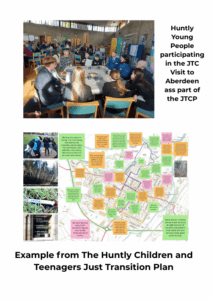
In contrast, the work in Huntly shows what’s possible when community capacity, vision, and support align. Both NESCAN Hub and the JTCP partners developed deep and valued relationships with the Huntly Development Trust and the extended community. The Huntly Development Trust was recently recognised with the 2025 Scottish Civic Trust My Place Award for Number 30 The Square, a community led regeneration of the town centre (watch the film or read more here). It stands as a proud testament to community wealth building in action: reclaiming the high street, embedding sustainability, and driving inclusive economic development. The JTCP continues to work alongside the people of Huntly to ensure climate and transition goals match real local priorities – including local stakeholders working together on regenerative food and farming initiatives, community energy schemes, and young people planning, and leading on ideas for future skills and sustainable job markets and opportunities.
Moray
As part of the approaches being delivered in Moray, tsiMoray has piloted the “Municipalities in Transition” system – providing the local communities with a way to reorganise themselves towards sustainability and wellbeing. This encapsulates systems thinking – non-linear ways to disrupt old, ineffective patterns and create new visions, and like the rest of the project approaches builds its methods around sociocracy principles – using appreciative and consensus-based governance. One such project involved with the JTCP in Moray was the Transition Town Forres projects that led to the development of their traditional building skills programme (construction, craft, trade etc.) for 16 – 24-year-olds in the area details of this project and others can be found in Empowering Communities Across Moray – Insights from tsiMoray.